
 623-229-0463

A valid last will and testament is the bedrock of your Arizona estate plan. While your plan may include other elements — trusts, advanced healthcare directives, powers of attorney, etc.— everything starts with your will. Dying without a will can create unintended problems for your family after you die and affect how your property gets distributed.
If you need a will in Arizona, the experienced estate planning lawyers at Pennington Law, PLLC can create a binding legal document that reflects your wishes. We can also discuss ways to expand your estate plan through additional tools to protect your assets and simplify the legal process. Our goals are to give you peace of mind, protect your family’s future, and honor your final preferences. Call now or complete our contact form for a free consultation.
Who can make a will in Arizona?
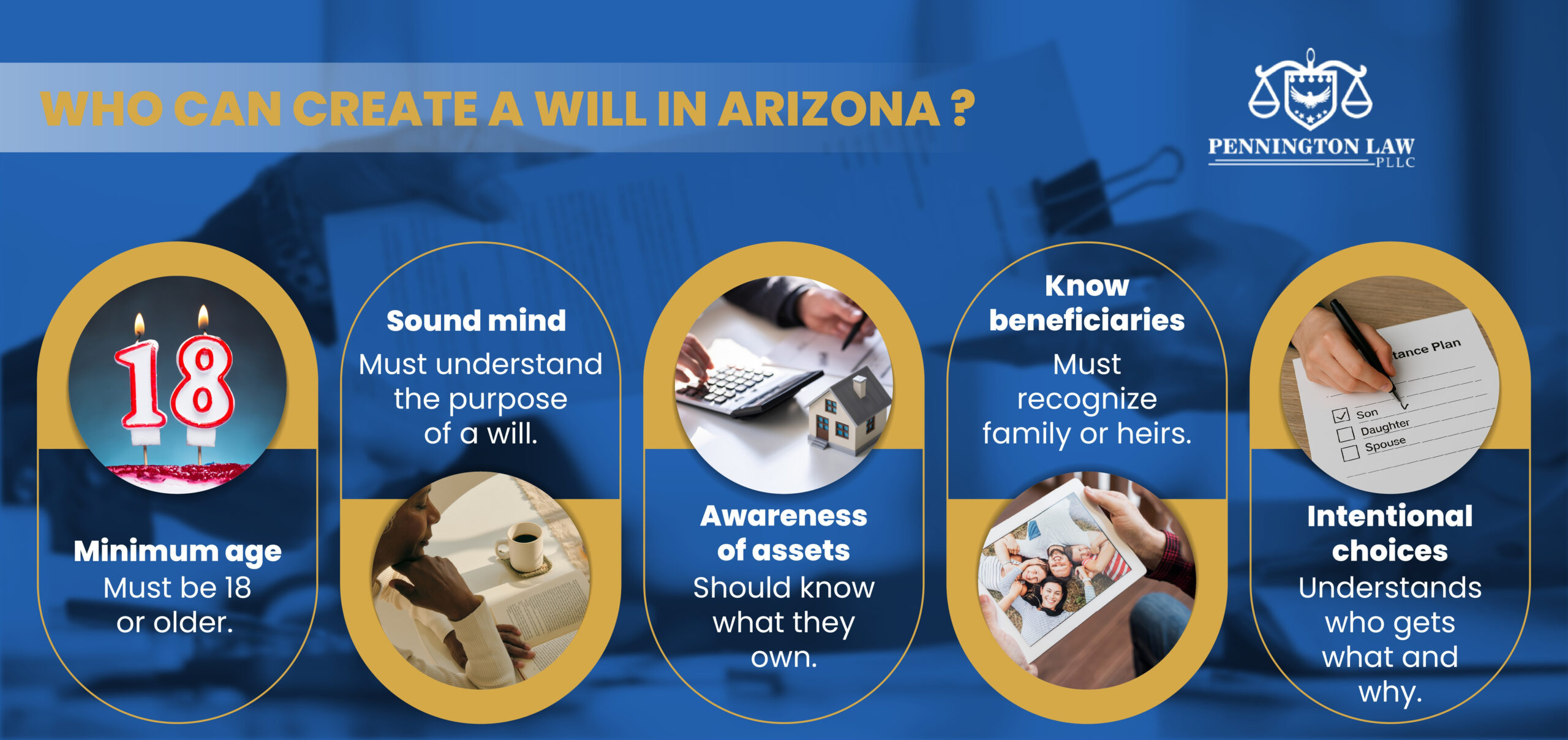
Arizona law gives anyone 18 or older the authority to create a will. The person making the will must be “of sound mind,” meaning they understand what a last will and testament does and what it means to leave their property to others after they die.
Whether someone is of sound mind when creating a will can be a contentious question. It’s a particularly thorny issue when older adults create wills and might have a degenerative illness like Alzheimer’s disease or dementia. Generally speaking, being of sound mind means someone:
- Comprehends that they are making a will
- Knows what they own
- Knows who their family or other beneficiaries are
- Understands who they want to leave their personal property to and why
What types of wills does Arizona accept?
Arizona law recognizes four types of wills:
- Witnessed will – To create a witnessed will, the person making it (the “testator”) must sign it in the presence of two witnesses. The witnesses must also sign the will. While generally valid, probate court may require the witnesses to testify that a witnessed will is valid or ask for other evidence to prove its authenticity.
- Self-proved will – The procedure for creating a self-proved will is largely the same as for a witnessed will, with one critical exception. To make a self-proved will, the creator and witnesses sign an affidavit in front of a notary. Having a notary witness the signing adds a layer of legal authenticity to the will, making it “self-proved.” These wills are much more likely to stand up to any legal challenges.
- Holographic will – A holographic will is one that the testator writes and signs by hand. The will maker does not need a witness to create a holographic will, though having a witness present makes it easier to prove the will is authentic. Most states do not allow holographic wills, but Arizona does. However, holographic wills often receive more scrutiny from probate courts. It’s advisable to create a self-proved or witnessed will to avoid legal complications for your family.
- Electronic will – Arizona recently changed its laws to electronic wills. An electronic will must include the creator’s electronic signature to stand up to legal scrutiny. Another person can make the creator’s signature in the creator’s “conscious presence” if the creator directs them to do so. Electronic wills also require the electronic signatures of at least two witnesses. The witnesses must be physically or virtually present with the creator when the creator signs the will and acknowledges the creator’s signature or will. The witnesses must also electronically sign the will within a reasonable time. If the witnesses attend the signing virtually, they must be physically located within the United States when the creator signs the will. Lastly, an electronic will must contain the date the creator and witnesses signed the will and a copy of a government-issued ID that was valid when the creator signed the will.
If you do not create a will, your assets will be distributed according to Arizona’s intestate succession laws. These statutes create an order of priority for passing property to descendants. Without named heirs through a will, the probate court will distribute your assets according to this list. If you have conflicts with relatives and do not wish them to inherit, you need a valid will to prevent them from getting your property by default.
How do I make my will valid in Arizona?
While different wills must meet specific rules under Arizona law, there are also some general requirements someone must meet to make a valid will.
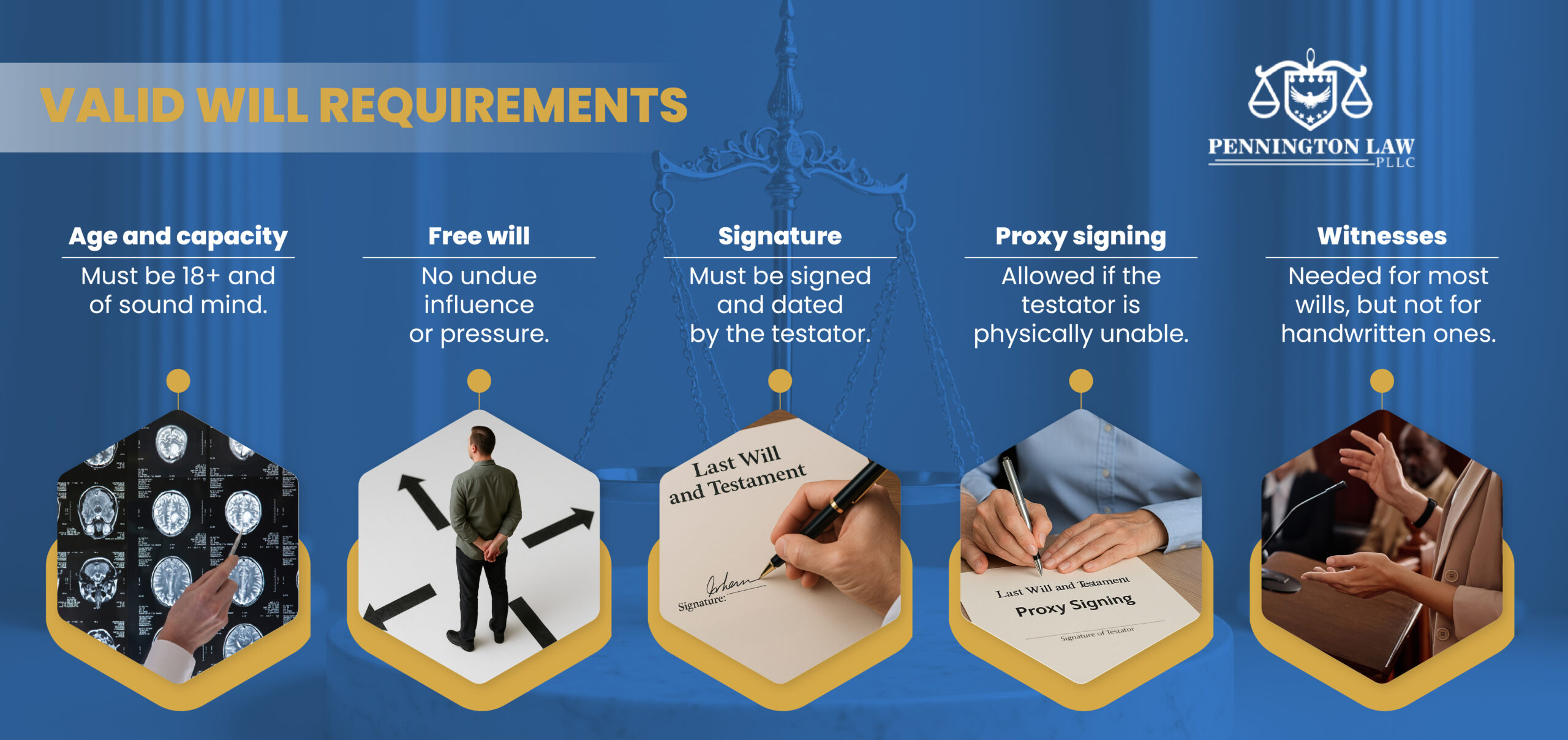
In addition to being at least 18 years old and of sound mind, the testator must be free of undue influence. This means nobody is pressuring them to create the will or make specific terms in the document. For example, a caregiver can’t pressure someone to create a will that benefits them at the expense of other heirs.
Finally, the person making a will must sign and date it. If the creator can’t sign the will themselves due to physical limitations, they can ask a proxy to sign it. Most Arizona wills require witnesses, but handwritten wills do not.
Who can witness a will in Arizona?
Arizona’s legal requirements for witnesses are simple. The witnesses must be generally competent and cannot be beneficiaries of the will. Witnesses also cannot be related to any beneficiaries by blood or marriage.
Who can change or revoke my will in Arizona?
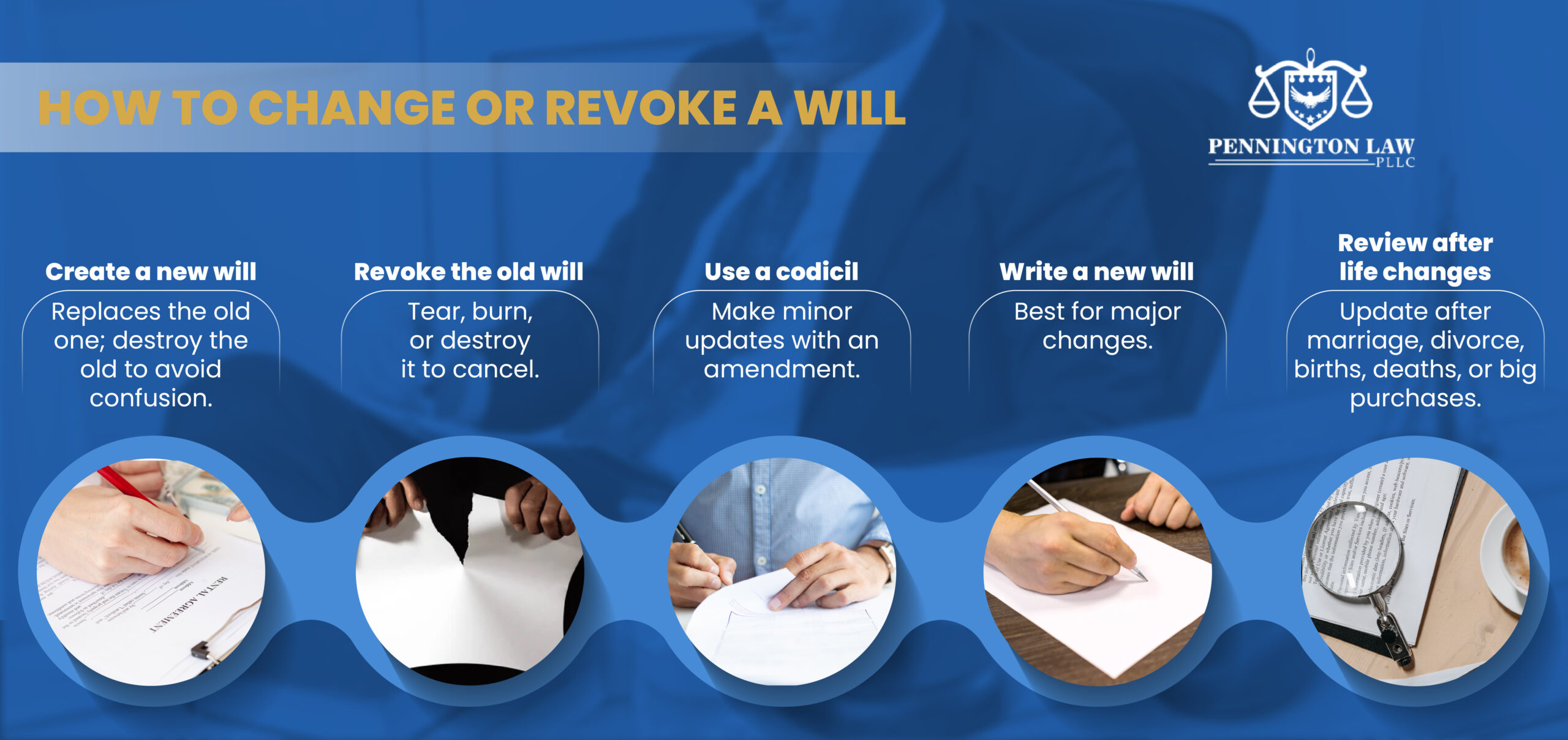
A person who creates a will can revoke or change it in several ways. They can create a new will that overrides the provisions of the old one, or they can tear up the old will, burn it, make it unreadable, or destroy it entirely. It’s unnecessary to destroy an old will for a newer one to be valid, but getting rid of the old one reduces confusion among the creator’s family and beneficiaries.
Changing a will can be done by executing a codicil for minor adjustments. A codicil is just an amendment to the existing will. If you need to make large-scale changes, drafting a new will and starting fresh could be more straightforward.
You should always review your will after significant life changes, such as:
- Marriage or divorce
- Birth or adoption of a child or grandchild
- Death of the named personal representative (executor)
- Death of a beneficiary
- Large new assets, such as real estate
- Business changes
Contact Our Arizona Estate Planning Attorneys
At Pennington Law, PLLC, we want to ensure your family and heirs honor your last wishes. Our skilled estate attorneys can draft a legally enforceable will that conforms to state law. We can also discuss other estate planning documents that provide a holistic strategy for asset protection, wealth preservation, and a lasting legacy for you. A strong estate plan can protect your assets from the probate process, saving time and minimizing disputes that could arise later.
A customized estate plan can leave you feeling confident that your preferences will be respected after your death. Call now or complete our contact form for a free consultation.
Frequently Asked Questions
What happens if a will is invalid in Arizona?
If a court finds a will invalid in Arizona, it means the document did not meet legal requirements. If there is no earlier valid will, the estate is distributed according to Arizona’s intestate succession laws. Depending on the circumstances, a surviving spouse may receive all or part of the estate, particularly based on whether the decedent had children from another relationship and whether the property is community or separate. If there is no spouse, the estate generally passes to children, parents, siblings, or other relatives in a set order.
Can I write my own will?
Yes. Arizona law allows residents to create wills without a lawyer’s help. However, you must meet several requirements for the will to be valid and legally binding. You must be at least 18 years old, have testamentary capacity, and make the will voluntarily for it to be valid. You must sign the will, and depending on its type, the will may need to be witnessed or entirely handwritten.
Rather than put your preferences at risk, consider getting help from an estate planning lawyer. They can draft a will that meets the appropriate requirements and can write clear terms that address your goals. They may also raise issues you hadn’t considered, like guardianship plans or what happens to digital assets.
How does Arizona determine whether someone had testamentary intent?
Testamentary intent refers to whether a person was in the right state of mind to create a valid will when the document was executed. Family members might dispute a will if they believe the deceased lacked capacity or was subject to undue influence when the will was drafted.
An Arizona court will look at the following factors to determine if the person who made the will had testamentary intent. This means examining whether they:
- Understood the purpose of the will
- Knew the assets they owned and their approximate value
- Recognized their intended beneficiaries
If the will-maker (testator) meets these requirements, the court will likely find that they had testamentary intent when they created the will.
What happens if a beneficiary dies before the testator in Arizona?
If a beneficiary dies before receiving their inheritance, Arizona’s anti-lapse law requires that the bequest go to the beneficiary’s descendants, but only if the original beneficiary was a direct descendant of the testator’s parents, typically a child or grandchild. The law does not apply to siblings, nieces, nephews, or friends.
To control who receives the gift, you can include a gift-over clause in your will that names a beneficiary who would take the bequest if the original beneficiary dies before the testator.
What are the legal grounds for contesting a will in Arizona?
Common legal grounds for contesting a will in Arizona include:
- Lack of capacity – The person who signed the will didn’t understand what they were doing, what they owned, or who would receive an inheritance.
- Conflicting wills – More than one version of the will exists, and it’s unclear which one is valid.
- Improper execution – The will wasn’t signed or witnessed as required by Arizona law.
- Undue influence – Someone pressured or manipulated the testator to change the will in their favor.
- Fraud or forgery – The will was faked, altered, or signed because of false information.
Can someone just write a will on a piece of paper?
Yes. Under Section 14-2503 of the Arizona Revised Statutes, you can legally write your own will by hand. This type of will is called an Arizona holographic will. While any will is better than none at all, it’s safer to work with an experienced attorney who understands the nuances of the law and the precise language to use to make a will legally compliant. For example, if a will is found invalid, your property could be distributed according to Arizona’s intestacy laws, potentially going to relatives you may not have intended to inherit.