
 623-229-0463

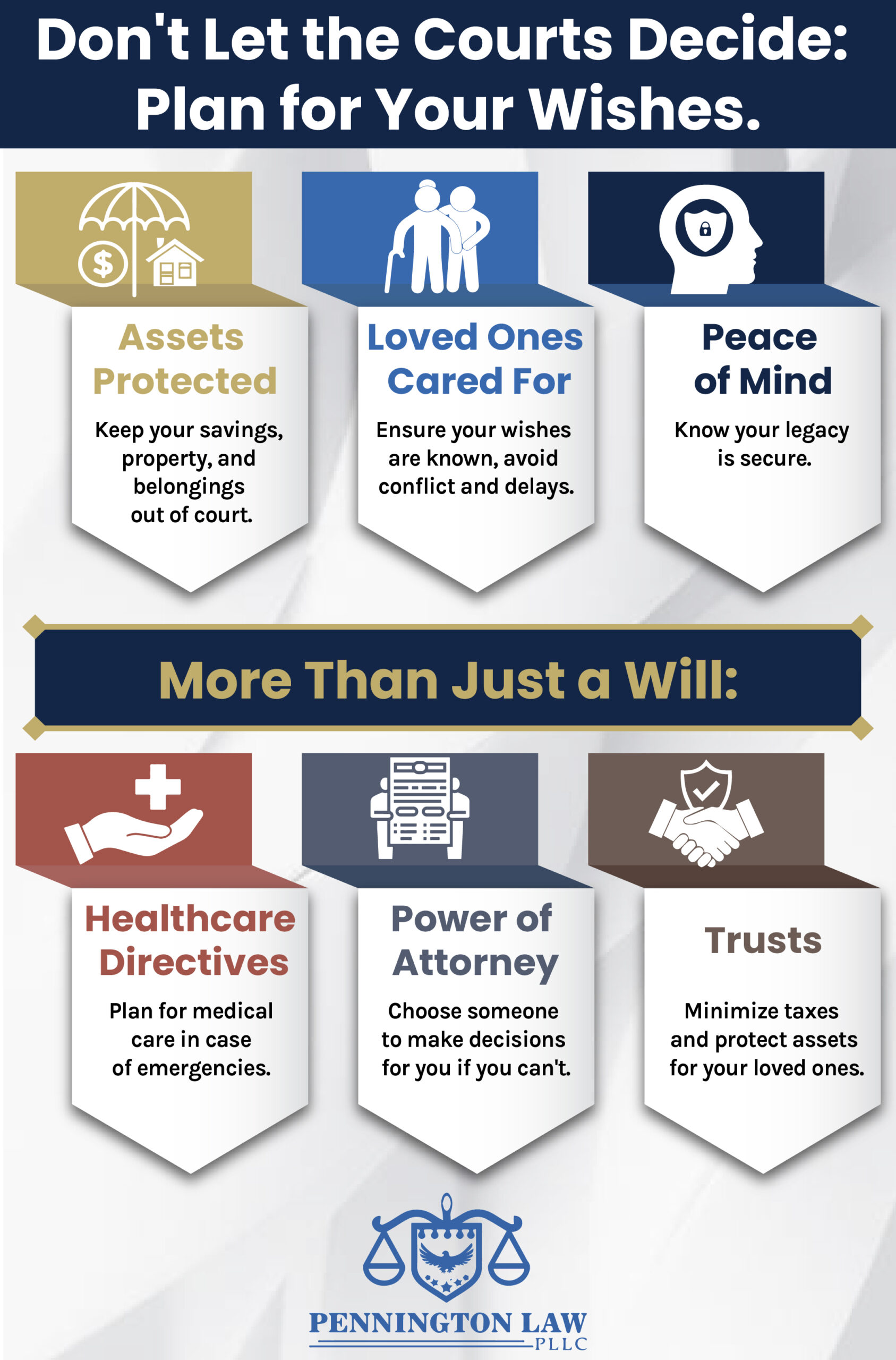
What is estate planning? It’s a way for you to protect your assets, your family, and your legacy. With a smart strategy, your estate — your savings, real estate property, priceless collectibles, even your pets — will be kept out of the court’s control. You’ll be assured that everything you’ve worked for will be distributed to your heirs as you see fit. Most of all, your loved ones won’t feel unnecessary strain or conflict, because they will clearly know what you want.
For many people, estate planning is considered no more than a simple exercise in preparing documents. Some even download templates from a website, fill in the blanks, and check off certain boxes. Yet, this approach is not a reliable way to accomplish what you want most from an estate plan. That’s because an estate plan means more than just leaving a will. It’s providing assurance that your death or disability will trigger vital support as quickly as possible — with the least disruption possible, especially through intrusion by the court.
At Pennington Law, PLLC, we have many years of estate planning experience. Our estate planning attorneys counsel clients in a variety of circumstances and backgrounds, from active-duty military members to retirees, and from small business owners to wealthy executives.
Each of us is committed to helping you create an estate plan that addresses the full range of your concerns at a price you can afford. Contact us today to learn more about what we can do to protect your legacy and your wealth.
To consult with an experienced estate planning attorney serving West Valley Arizona, call 623-292-5305
Why Is It Important to Have an Estate Plan?
If you don’t have a will or another kind of estate plan in place upon your death, your family will find itself in court fighting to claim your assets. This is known as probate. It causes significant financial expense, as well as many months — possibly years — disputing things. Worse, probate causes conflict for your family and loved ones. Instead of grieving for you, they will be fighting with one another about what they think your wishes would have been. Eventually, the court will decide the fate of your estate, and the ruling could go against anything you would have wanted.
Aside from making your wishes clear, estate planning has several other benefits. You can protect and safe-keep your assets by way of putting them in a trust. With a trust, you’ll be able to minimize any tax penalties your heirs will pay on your estate and help your family avoid the draining probate process. Trusts also give you more flexibility regarding how you wish to distribute your assets and can protect your assets from family members you do not trust.
In addition, with proper estate planning, you’ll have a scheme in place that will address what to do for healthcare emergencies. The most common is the Advance Healthcare Directive. It outlines instructions for your family to follow should you become mentally or physically incapacitated because of an injury or illness. Another is the Power of Attorney. This allows you to choose someone to make important decisions — financial and medical — on your behalf if you won’t be able to do so. With these in place, your loved ones won’t be forced to face painful end-of-life decisions — many of which they may not be prepared to make.
Arizona estate planning attorney near me
What Is a Last Will and Testament?
Your last will and testament sets forth distribution of your property and assets; establishes vital care for your children; and otherwise lets your wishes be known about how you want things to go upon your death. The will is a directive through which you can leave property to a person or entity who need not be a blood relative (friend, domestic partner, charity, etc.).
An ideal will should:
- Identify all assets and liabilities in the estate
- Account for the handling of all assets in which you have ownership
- Name a trustworthy and capable executor
- Identify all beneficiaries precisely to avoid confusion with persons having similar names
A will can also be used to set up trusts for the care of minor children or family members with special needs or for the benefit of charities. You can even decide what happens to your pets.
Click to contact our West Valley Arizona estate planning lawyer today
What Is a Trust?
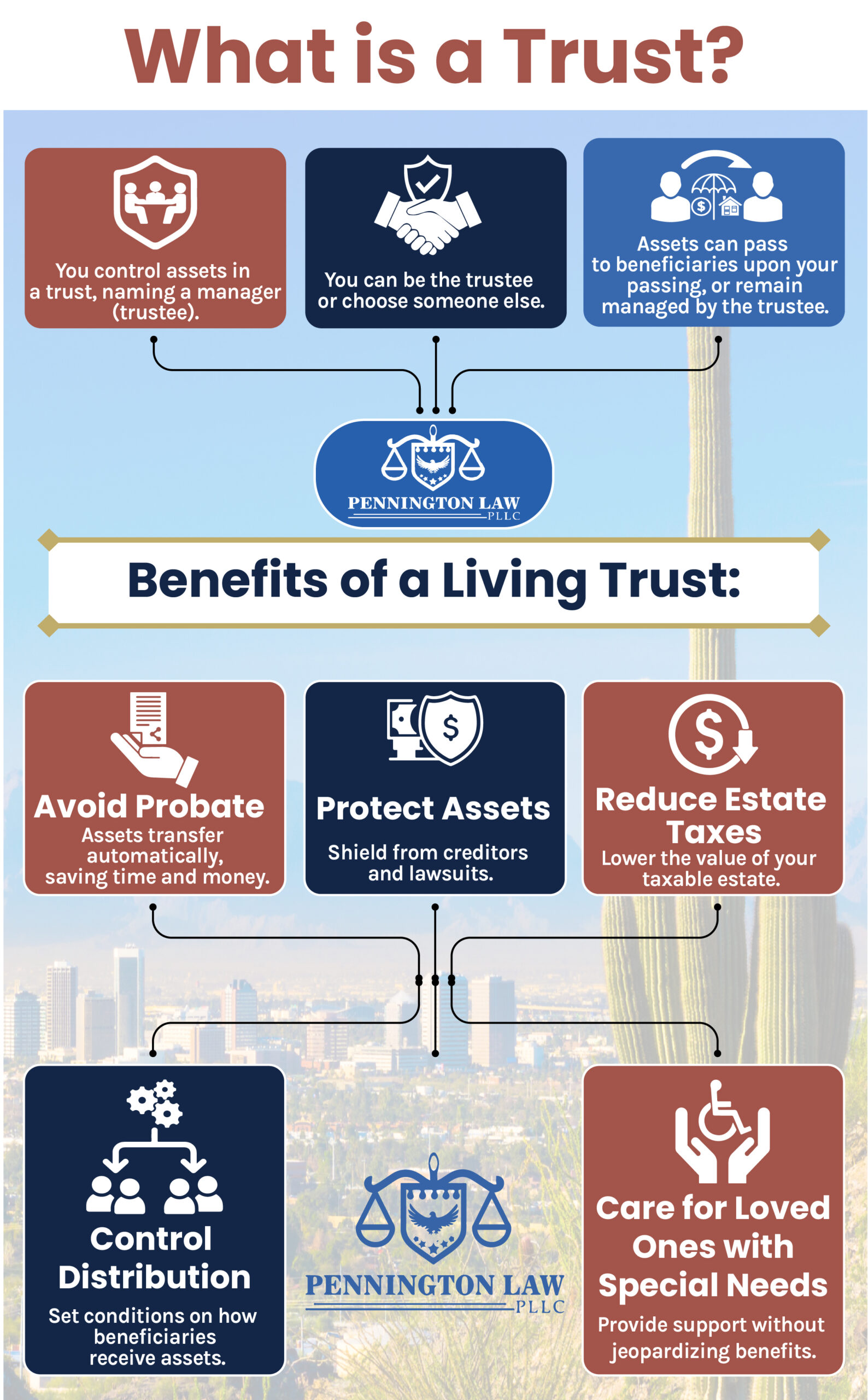
With a trust, you are creating a legal entity stating your place as the legal owner of a designated property. A trustee manages this property during your lifetime. You can name yourself as the trustee, or you may appoint another person or institution. You can then stipulate that, when you die, the property in question continue under the management of a trustee, or that it be transferred to named beneficiaries, depending on how you want to set things up. In addition, you can create a trust as part of a will.
Common trusts include:
- Asset Protection Trusts
- Credit Shelter Trust
- Generation-Skipping Trust
- Irrevocable Life Insurance Trust
- Qualified Personal Residence Trust
One of the options you can elect as part of your estate plan is a living trust. This is a trust you craft during your lifetime. A living trust can be a better choice than a will, because:
- Your family will circumvent probate, as the living trust will provide for asset transfers that would automatically happen.
- Your assets will be shielded from legal claims or liability.
- You will reduce the size of your estate, thus avoiding a costly federal estate tax.
- You will be able to place stipulations on the release of funds or the use of property.
- You will grant an income or allowance for a loved one.
- If you are the parent or serve as guardian of someone with special needs, you’ll be able to support them without barring them from government benefits.
With an experienced Arizona estate planning attorney on your side, you’ll be able to craft and carry out a trust that meets your specific situation and needs.
Submit a Consultation Request form for estate planning today
What Is a Spendthrift Trust?
A trust may be put in place to control the property of spendthrifts — people who are the opposite of thrifty spenders. Spendthrifts may waste money due to their own poor financial judgment or to being influenced or defrauded by others.
A spendthrift trust gives the appointed trustee discretion to control disbursements so that trust assets are protected from waste. Trustees have the authority to decide how much money the beneficiary will get, how often, and on what conditions. Payments can be made to or on behalf of the beneficiaries, such as to pay rent, tuition, or other expenses deemed necessary or reasonable.
Estate Planning FAQs
How much does estate planning cost?
Estate planning costs vary based on the complexity of a person’s estate. For people with small estates, costs will be considerably lower than for high-net-worth individuals with complex estates and substantial asset holdings. Some estate planning attorneys offer flat fees for standard services, but each law firm is different. You can learn more about the potential cost of Pennington Law, PLLC’s planning services by scheduling a free consultation to discuss your personal and financial situation.
Why shouldn’t I just use an online will template?
Online templates are better than nothing, but they may not account for the ways Arizona’s asset distribution laws differ. They offer a limited approach to drafting a will and may not suit individuals with significant assets or complicated estates. Templates cannot flag issues such as tax implications or beneficiary conflicts. Online providers may not gather the complete information needed for proper drafting. Improperly executed documents can be challenged or rejected by the courts, leaving unresolved issues that arise only after death and affect loved ones and related legal proceedings.
What happens if I don’t have a will or trust?
Without a will, your estate enters probate and is distributed under Arizona intestate succession laws. State law controls asset division, typically distributing the estate among surviving spouses and blood relatives. Unmarried partners, stepchildren, friends, and charities receive nothing unless you provide for them in a will or trust. Without an estate plan, individuals you would not choose as beneficiaries may inherit your property simply because they fall within the state’s intestacy laws.
How long does it take to create an estate plan?
The time required to create a comprehensive estate plan depends on its complexity. Your attorney may recommend several legal documents, such as a will, one or more trusts, powers of attorney, advance health care directives, and nominations of guardians for minor children.
Once you decide which tools to include, your lawyer will draft the documents and review them with you before execution. You may also need time to gather the information required to prepare your plan, including an inventory of assets, beneficiary designations, and choices for health care and financial agents. Having clear asset information and planning goals can help shorten the overall timeline.